Structure, common nicknames and comparisons
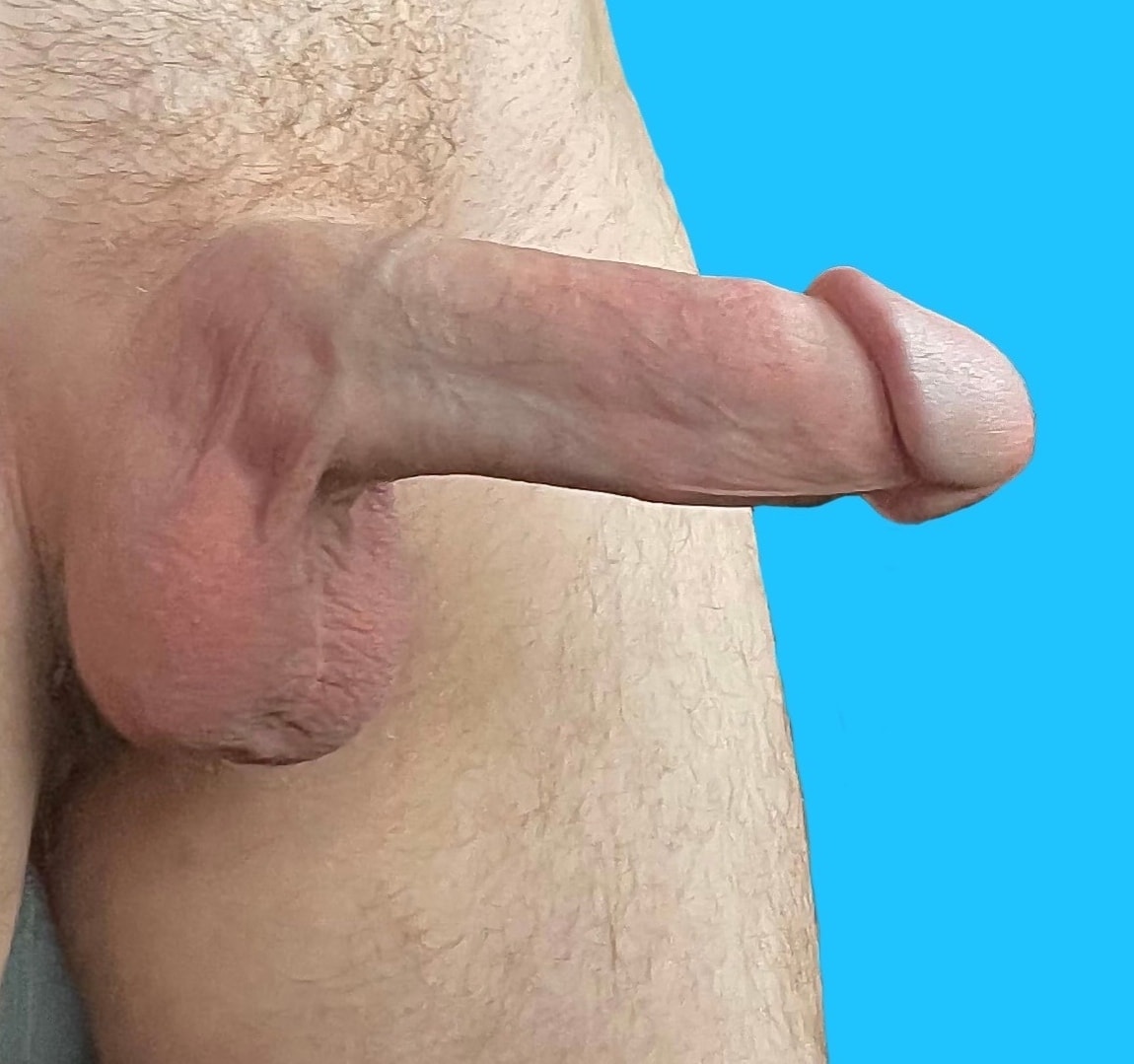
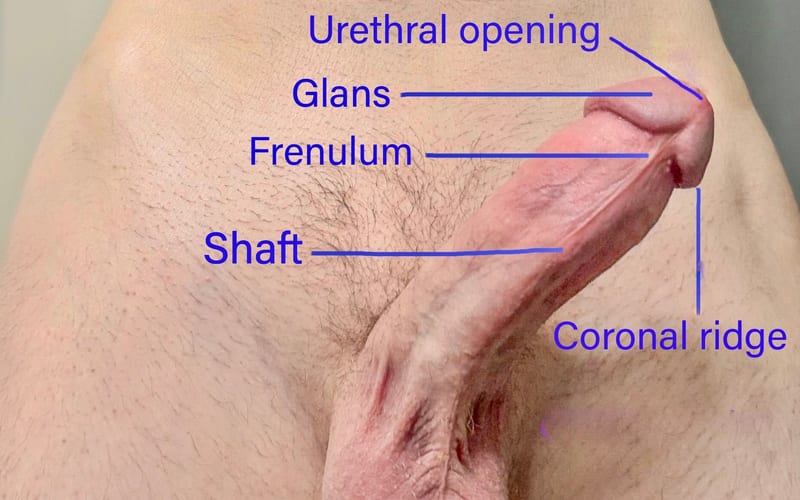
The penis is an external organ containing the urethra allowing urine and semen to leave the body. Its basic structure consists of the glans (head), shaft, and the testicles beneath. The penises general size and length serves both as an efficient way to quickly expel urine without wetting the body as well as being the male sex organ responsible for reproduction. Penises are a specifically fascinating body part because of their uniqueness compared to others depending on the man’s lower anatomy genetics and circumcision status. The visual structure of the penis has many unique comparisons but typically their overall appearance most closely resembles a sausage with a mushroom tip attached at the end. Commonly used nicknames are dick, pecker, rod, hog, sausage, cock or meat. Cock being the most common, likely nodding to the rooster/male chicken and the penises visual comparison to their head and neck. The ability of the roosters neck to extend outward and retract similarly resembles the arousal process of the penis, as well as the pinkish red flaps known as the ‘comb and wattles’ on a roosters head resembling the foreskin/frenulum of the penis.
12 entries
Natural Variation
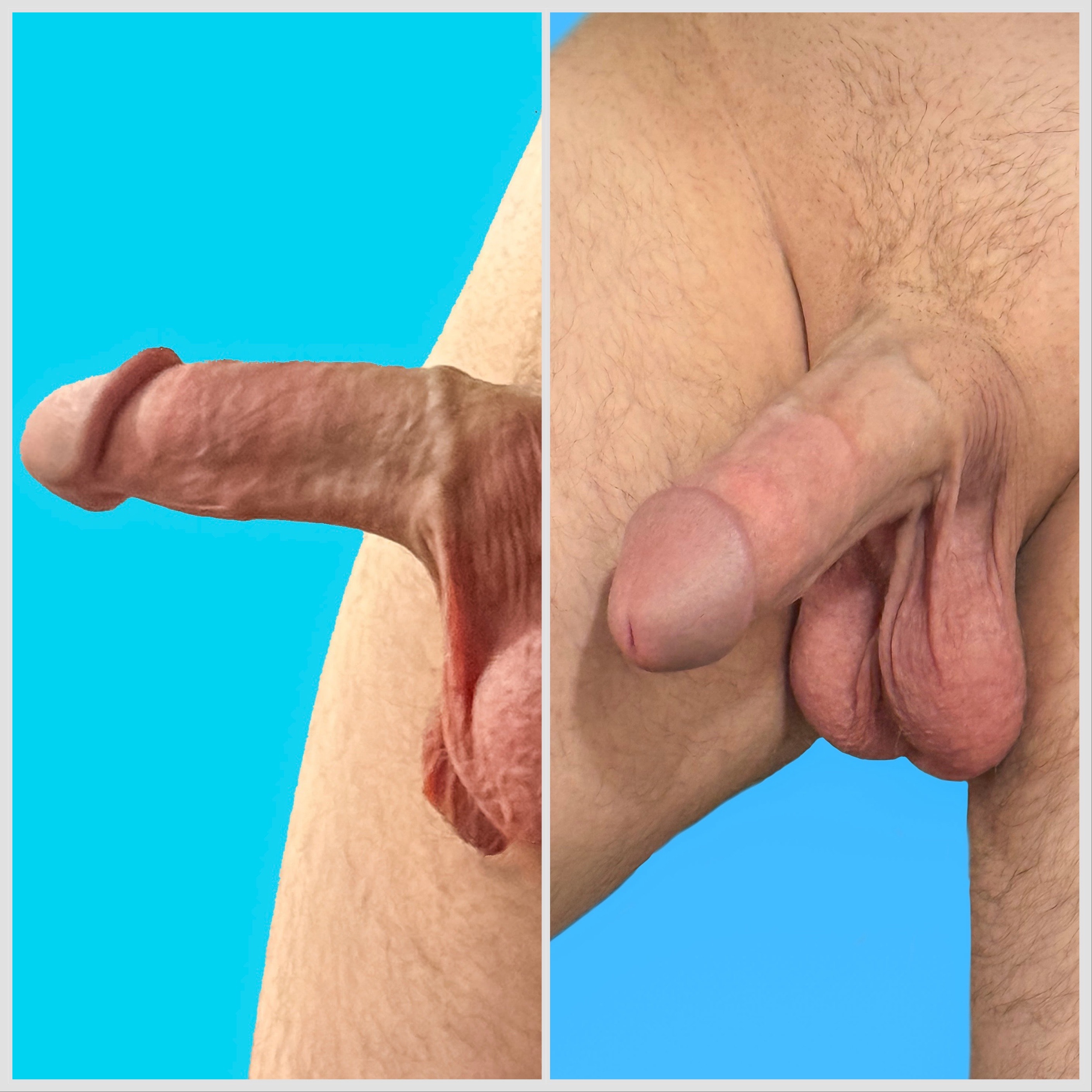
Part of the beauty of penises is that they do not all look the same. A few of the obvious differences being size and circumcision status however penis can vary in appearance in many other ways. Some are wider at the base, narrowing towards the tip. Some stick straight out, some curve upward and others downward. It is also common for some to have a natural left or right curve. Some shafts are wider, others more slender. Some with many visible veins, others not as much. The glans (head) of the penis can also vary in shapes and sizes. Some with a prominent coronal ridge, giving it the familiar mushroom head appearance. Others with a more elongated tip result in more of a bell shape. Some are perfectly rounded resembling a helmet or an acorn. These features become most apparent when a man is post-pubescent and erect.
18 entries
Foreskin & Circumcision
The real penis pictured in the structural anatomy photo on our homepage is an example of a circumcised penis. This means that either at birth or later in life, the foreskin was removed, exposing the glans and frenulum even when he’s flaccid. This process is typically done because of religious, traditional and/or hygienic motives. Circumcised men are most commonly Jewish, American or Canadian descent. Uncircumcised penises grow beyond puberty with their foreskin still attached which is the most common penis type globally outside of the countries listed above. Being uncircumcised means there is an extra layer of skin that extends beyond the shaft and around the head, covering it completely when flaccid and sometimes even when erect. The skin usually has to be manually pulled back in order to expose the full glans. The purpose of this extra skin is believed to be a natural hood/covering to protect the glans since early humans didn’t wear clothing and men were the hunter gatherers. The foreskin protects this sensitive area from unwanted external contact.
9 entries
Development and Maturity
When a young man reaches puberty is when his penis starts to take its true shape and function. The testicles grow much larger, therefore sagging down into the scrotum. The shaft and glans of the penis grow as well with their features becoming more prominent and sexually responsive. This is also around the time that masturbation and/or sex become frequent. The penis has finished growing and by late teen hood, he is at maximum fertility and testosterone count. This is why teen pregnancy is common. Young men are producing testosterone so rapidly that it causes inconvenient erections at times he may not even be aroused.
7 entries
Sexual Function
The penises primary function is reproduction, so how exactly does that process work? The penis needs to become erect in order to perform so when a man is sexually aroused, his heart rate begins to increase and blood begins to flow down into the erectile tissue until it becomes trapped, allowing the penis to stay erect until ejaculation. At this same time, his nerves release nitric oxide (NO), which increases a chemical called cGMP in smooth muscle. This relaxes arteries and erectile tissue in his penis, allowing much more blood to enter for a firm erection. It isn’t just his shaft that swells though. Both his glans and testicles swell to twice their size once fully erect. This is when the glans become stiff, forming their familiar helmet/acorn shape. The glans is the most sensitive part of the penis and serves as an immediate cushion for sexual penetration while also utilizing its shape to remove excess fluid after pulling out. This function is not as effective if a man is uncircumcised.
11 entries